
Transcript
Announcer:
You’re listening to On the Frontlines of Pediatric Vaccines on ReachMD. And now, here’s your host, Dr. Christina Madison.
Dr. Madison:
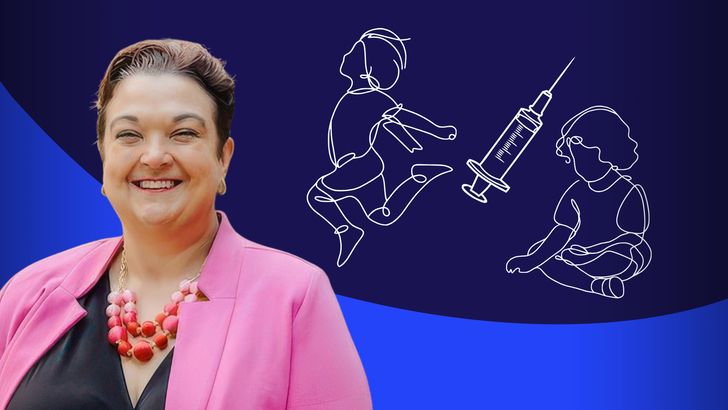
Welcome to On the Frontlines of Pediatric Vaccines on ReachMD. I'm Dr. Christina Madison, and joining me to discuss access to pediatric vaccinations in rural and underserved communities is Dr. Jessica Snowden. She is a pediatric infectious disease specialist and Vice Chancellor for Research at the University of Tennessee Health Sciences Center in Memphis, where she also serves as a Professor of Pediatrics. Dr. Snowden, thank you so much for joining us today.
Dr. Snowden:
It is my pleasure to be here. This is one of my favorite things to talk about, and I think there's no more important time to have this conversation.
Dr. Madison:
So with that, I'm going to go ahead and dive into a few questions. What does vaccine accessibility currently look like in rural and underserved communities, and why is it so important to focus on this issue at this current time?
Dr. Snowden:
We know that, at a national level, we are really privileged in that we have highly effective vaccines. And in, for example, my upper middle class suburban community, I don't have to go farther than five minutes to vaccinate my teenager.
Unfortunately, that's not true all over the place. Access is really uneven, and that really predicts how well somebody's going to be able to get their vaccine on time. We've all seen a lot in the news lately around, in particular, rural healthcare and the closing of clinics, hospitals, and pharmacies. And not only does that remove our ability to get acute care when we need it—or preventative care like prenatal care—but it also means if I wanted to vaccinate my child, I would have to go much further to find somewhere to do that.
And that creates pockets of vulnerability where we can see outbreaks occur. And we've seen that in multiple different infectious diseases where we have places where vaccine rates are low, and we want to make sure we're not making the assumption that that's a lack of vaccine confidence. Oftentimes, those are really access issues and systematic issues, not anything that's related to an individual failure.
Dr. Madison:
So with that context in mind, what are some of the most persistent structural or systemic barriers that prevent children in these communities from receiving timely vaccinations?
Dr. Snowden:
It really is multifactorial, especially when we think about rural communities, underserved communities, and urban areas. We have workforce shortages. There are not nearly enough pediatric providers in the world. There used to be a place that you could go no matter where you were—the Health Department—to get vaccinated. Now, we don't have the resources or workforces in all of the places that we need to.
Clinic hours can be limited, and that makes it hard for working families to be able to get there. I think we forget sometimes that the ability to take time off of work is a privilege that not everybody gets. In many cases, taking the time off of work to take my child to get vaccinated somewhere means I'm not going to get paid for that amount of time. That's always been challenging, and that's particularly challenging now for so many families, when financial pressures are worse.
And then we really see a lot of issues with supply chain and funding, even for a clinic. Even if you have a clinic in your small town or in your under-resourced part of the city, can that clinic afford to stock the vaccines that your children are going to need in terms of keeping them in-house, keeping them in the freezer or refrigerator, or whatever else it is that you're going to need? All of that requires a lot of cost and upfront infrastructure for the clinic to be able to take on.
And so what looks like hesitancy or reluctance to vaccinate, in many cases, actually is just access friction. It's much harder for you to actually get what you need even if you wanted it.
Dr. Madison:
I also just wanted to ask the question, what role do you think social determinants of health play in these decisions, and how do you think that really shapes our vaccination rates in these populations?
Dr. Snowden:
I think we've all seen this play out on a huge scale over the last five years in ways that had always been historically true. But now we really are seeing differences in terms of, what is your news source? Where are you getting information? That drives how much you understand about the vaccine schedule, what you think about the vaccine schedule, and where you can have access to those things.
So we know that not just your health literacy, but really what is the source of information that you're filtering through your own sense of health literacy has changed a lot and drives a lot of changes in behavior. And we've seen that play out over time.
The other pieces of this, really, as we think about the historical aspects of this, for many communities, especially when vaccines are new, it can feel like it's taking a leap of faith for me to be able to go forward and do this, if you've got that counter message. And if we know, historically, my people haven't been treated well by the healthcare environment, it's understandable to have questions.
The other thing that we see that's really a community driver of a lot of this is actually digital access. One of the things that we know that has been highly effective in promoting vaccine uptake and vaccines on time are things like digital reminders and digital scheduling. I hate calling and talking to a person on the phone. If I can't just click, I am irritated and less likely to do it. And yet, I can remember a couple years ago, I was on a television show where people were calling in and asking questions about vaccines. One of the questions was from an older woman in a rural area, and she said, "All the instructions keep telling me to go to a website. I don't have a computer. What is the option for me to go somewhere else?" So we have to think economically, and, frankly, about access of internet and everything else. A lot of the things that we assume are going work for people won't work for people in underserved areas.
The other piece that really becomes a barrier is finance—even perceived finance. So there are vaccines that we know are covered by one of the many governmental resources that makes vaccines available for free. However, we in our practices frequently will ask you for your insurance card anyway, because if we can recover some part of the vaccine administration fee or whatever else, then we're going do that. That's part of managing a practice.
However, from a patient perspective, if you're going to ask me for that, that must mean I have to have that. And so we have to be really careful about these perceived economic barriers that we have in place for people to be able to get access to a vaccine. It really is a lot about building trust locally, understanding what the barriers are, and helping to address those in ways that we may miss if we just look at things at a national scale.
Dr. Madison:
I love the fact that you brought up that if there's new vaccines, that may also be something that needs to have a very deliberate conversation, and a really patient-centered and shared clinical decision-making initiation, so that folks know that this isn't just something that I'm thrusting upon you. This is something that I'm really trying to do in order to make you healthy and your family healthy and happy as well.
Dr. Snowden:
That's one of the things I'm talking to trainees about how we have that conversation. Frequently, when someone asks a question about a vaccine, it's really easy to get that deer-in-the-headlights look, because you're not sure if this is going to be like my instructor asking me to please explain how the protein conjugation makes this vaccine work, or if it’s it going to be somebody who's going to take me down a rabbit hole of anti-vax sentiment.
Many times, it's just somebody who has a genuine question about what's in the vaccine, but when we get that deer-in-the-headlights look, suddenly we look like we're trying to hide something. And it's really important, I think, for all of us to practice having these conversations and practice how to explain things, because most people just have genuine questions and want to know more. Everybody—almost everybody in the world—has the kids' best interest at heart. They just may have a different worldview than you do, and trying to figure out how to bridge that gap is all of our responsibility.
Dr. Madison:
For those of you just tuning in, you're listening to On the Frontlines of Pediatric Vaccines on ReachMD. I'm Dr. Christina Madison, and I'm speaking with Dr. Jessica Snowden about strategies to expand pediatric vaccination in rural and underserved communities.
So, Dr. Snowden, let's shift gears a bit now and talk about potential solutions to some of these issues, because I know we just talked about a bunch of problems, so we definitely want to make sure that the listeners leave here with some solutions. So from your perspective, what strategies or programs have you seen that have shown the most promise in improving vaccine access?
Dr. Snowden:
I think one of the big things we can do is go to where people are. We talked a lot about requiring somebody to take off work, get transportation, get childcare, and everything else, and the way to solve that problem in many ways is say, "You don't have to come to me, I'll come to you." What that might look like are mobile clinics. That might look like community events, where I know everybody is going to be at Tractor Supply on Saturday, because that's when the new delivery of whatever it is I need comes in, right? Let's set up our mobile van there and give our vaccines while we're there. Let's go to school, where you are. Again, with consent from the parents and trained people there, but let's say, you don't have to come to us. We'll come to you.
So I think the more we can figure out how to reduce those barriers, the better. And so thinking about ways that we can—either through partnership with a community partner, like a church, a community group, or something where you're going to be there anyway—go ahead and help you get vaccinated or come out to you through some kind of remote work. I think those things can reduce some of that barrier and some of that access friction.
The other things that we touched on a little bit earlier are things like expanding what pharmacy-based vaccination programs look like. And not just pharmacies, but making every point of contact with the healthcare system an opportunity to get vaccinated. So if you're in urgent care because you broke your leg, and it's flu vaccine time, let's go ahead and get you vaccinated while you're there.
And then we know that there's a lot of data that says that reminder/recall systems and registries really do work well. For most of us who are busy parents, we have the best of intentions, and then we look up and suddenly it's May 4th. And in my mind, it should still be February. So having something that reminds us, my son is 14—did he get his HPV vaccine? Somebody's going to email me and remind me that he needs to do that. Or when his flu vaccine comes up. So these are reminder systems that, again, reduce the friction for all of us to be able to get the care that we're supposed to be able to get as we move into those spaces.
Dr. Madison:
Yeah, I really love that you brought up mobile clinics. That's something that I love to do. I actually did COVID vaccines at a jazz festival. It was pretty amazing. Again, you got to go to the people sometimes, and I love that you brought that up, because ultimately, we are busy.
So building on that, what are some ways individual healthcare providers can build trust with their communities in order to boost vaccine confidence?
Dr. Snowden:
I think one of the most important things for all of us to remember is, no matter your role within the healthcare system—if you're the person who greets people at the front desk, if you're the nurse, if you're the doctor, if you're the pharmacist, if you're the dentist—all of us have the opportunity to help build and reinforce trust.
Vaccines are safe. They are effective. They are one of the most powerful things we've ever invented in modern medicine, and our lives are tremendously different because of them. Every one of us has an opportunity, no matter where we are, to reinforce that message. And so when we think about building trust and building confidence, it really has to be all of us working together. It really doesn't matter what I say as the provider if the person who is checking you in was raising questions. It's the whole team that needs to be on the same page.
Things that we know work: having a strong, presumptive recommendations. It's not a question. It's, today we're going to get these vaccines. When somebody asks a question—we talked about this a little bit earlier—don't assume that we're getting ready for an argument. Instead, feel out why. What is your question? Where does it really come from? Frequently, what I hear is that it's coming from somebody else that they know who has told them something, and can we please just address that? Or I really just want to know what's in the bottle. They don't tell us what's in the bottle. Actually they do, it's available online, but it's a whole lot of words that don't mean anything. Here's what actually means something to you.
Remember, these are never just one-time conversations, and so we want to leave the door open. So even if it's not a yes now, hopefully, it will be as we move along. And really build in that partnership piece. The reason I'm making this recommendation is because I think your child is worth it, right? I want to help you make the best choice for your kid.
Dr. Madison:
I just want to wrap up with one more question for you. Looking ahead, what policy changes or system level investments could make the biggest difference in ensuring equitable vaccine access for all children?
Dr. Snowden:
I think one of the most important things we can all do is advocate for evidence-based vaccine schedules, because that reduces confusion for families. That also makes it easier for us to then do all the things that need to come next, like making it easier for kids to get access to vaccines through the Health Department or Vaccine for Children infrastructures and making sure that we've got that availability there. That all is predicated on having an evidence-based platform that we're moving forward with.
Thinking about some of the things like workforce that we've talked about, what is scope of practice that needs to be addressed in terms of who can deliver vaccinations? What does the workforce need to look like, especially for pediatric care as we move outside of cities? What are the things that we can do to support school-based healthcare programs or data systems that allow us to track where vaccines are actually being given. And where is there a gap that needs that targeted mobile health intervention? And so really thinking about those kind of issues, what are the policies we advocate for? What are the things that come from it? It's predicated on an evidence-based vaccine schedule. And then, what are the things that we need to build on top of that?
Dr. Madison:
Dr. Snowden, thank you so much for all of your insight and your expertise, and for joining me today for this very important discussion on how we can improve access to pediatric vaccinations in rural and underserved populations.
Announcer:
You’ve been listening to On the Frontlines of Pediatric Vaccines on ReachMD. To access this and other episodes in our series, visit On the Frontlines of Pediatric Vaccines on ReachMD.com, where you can Be Part of the Knowledge. Thanks for listening!
